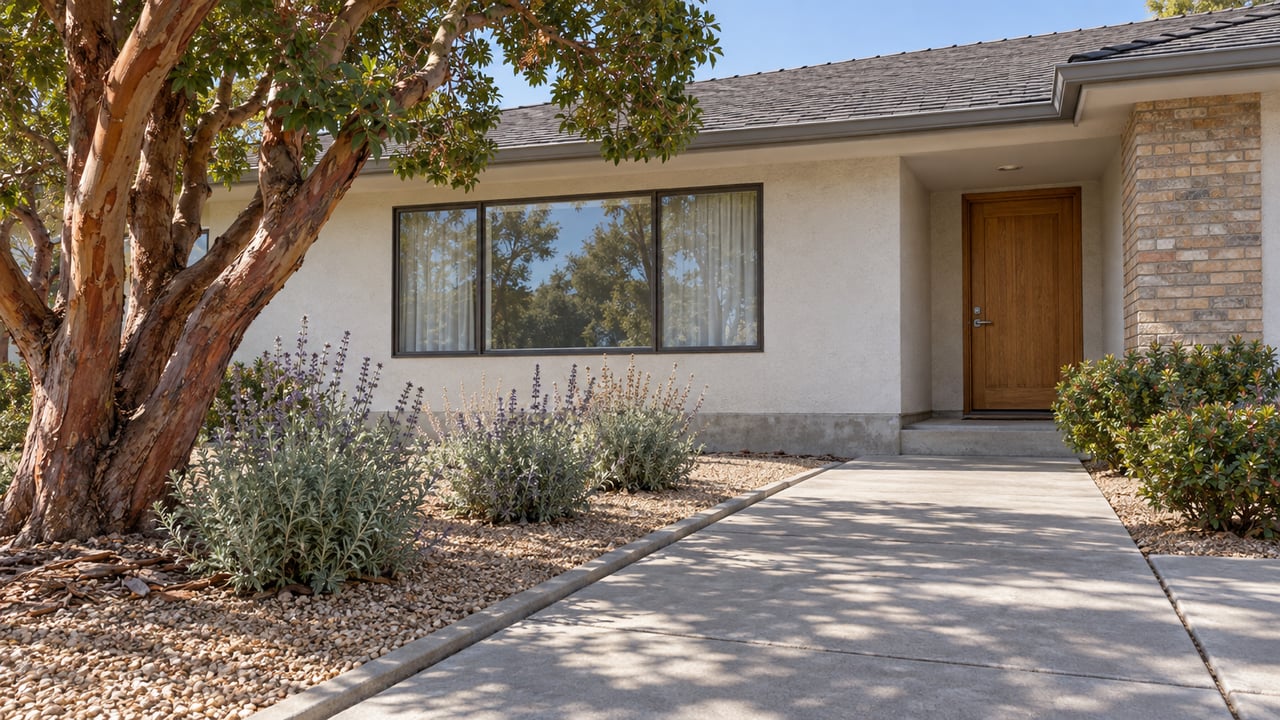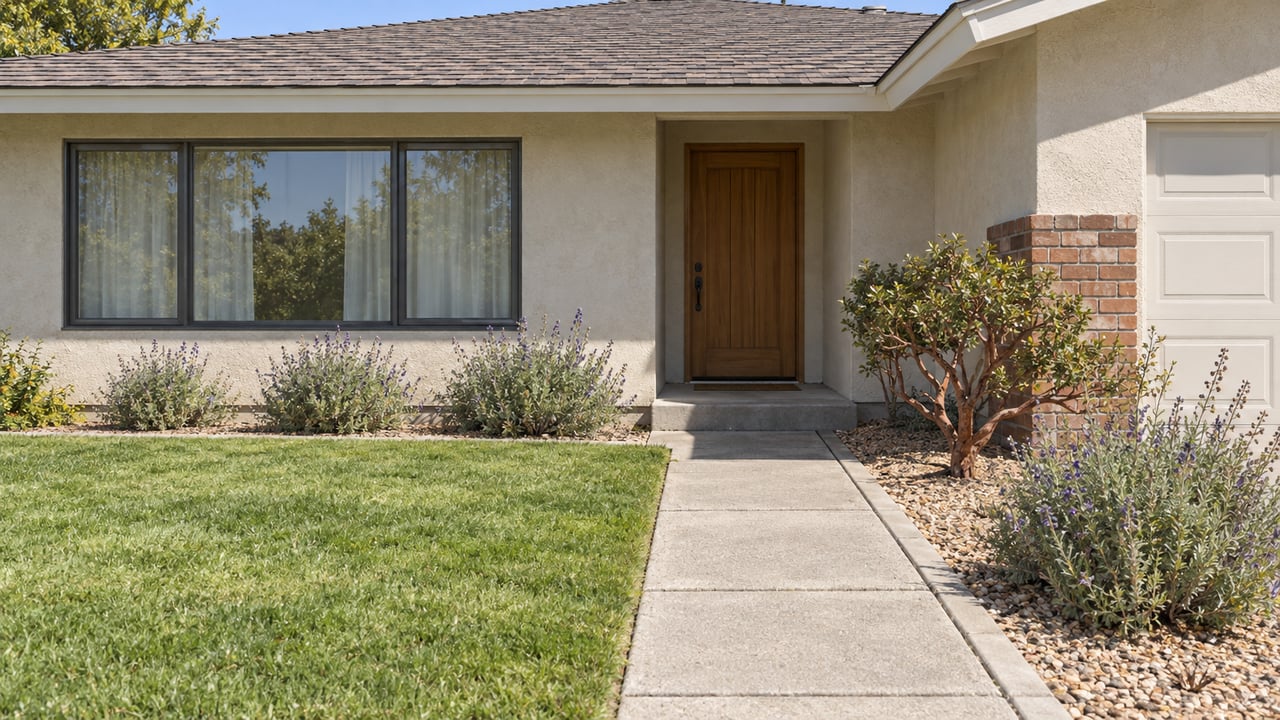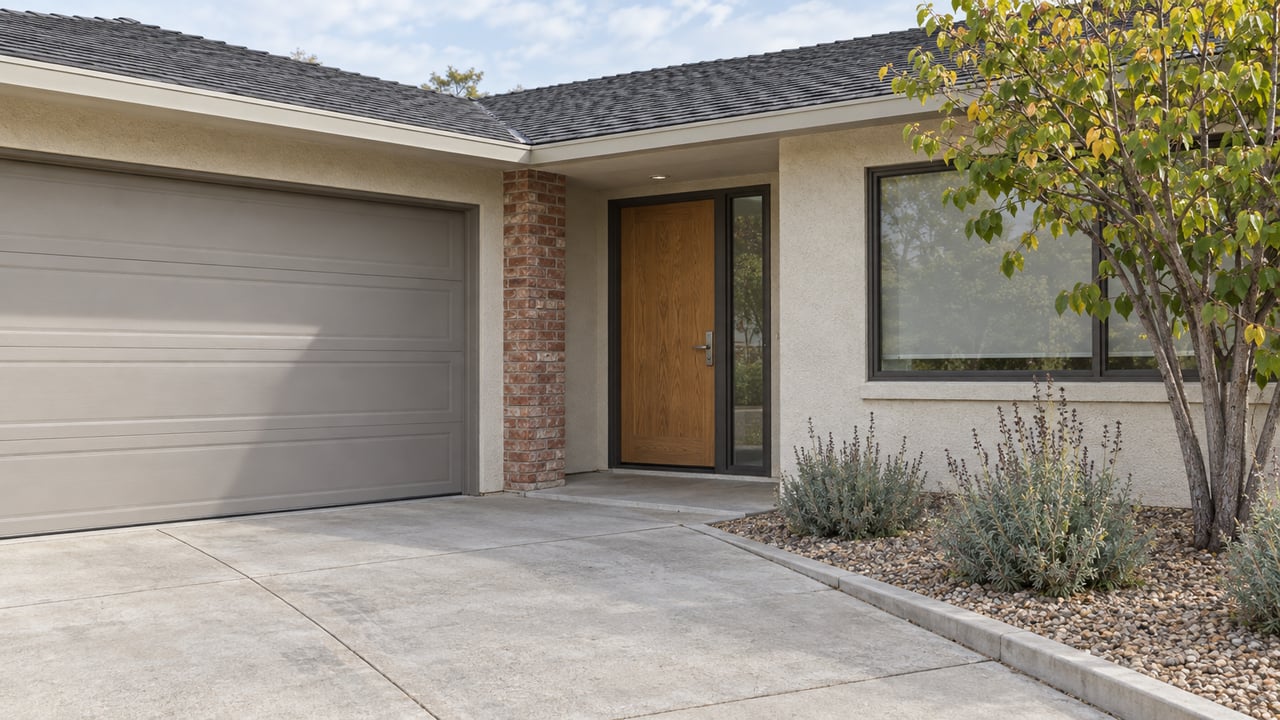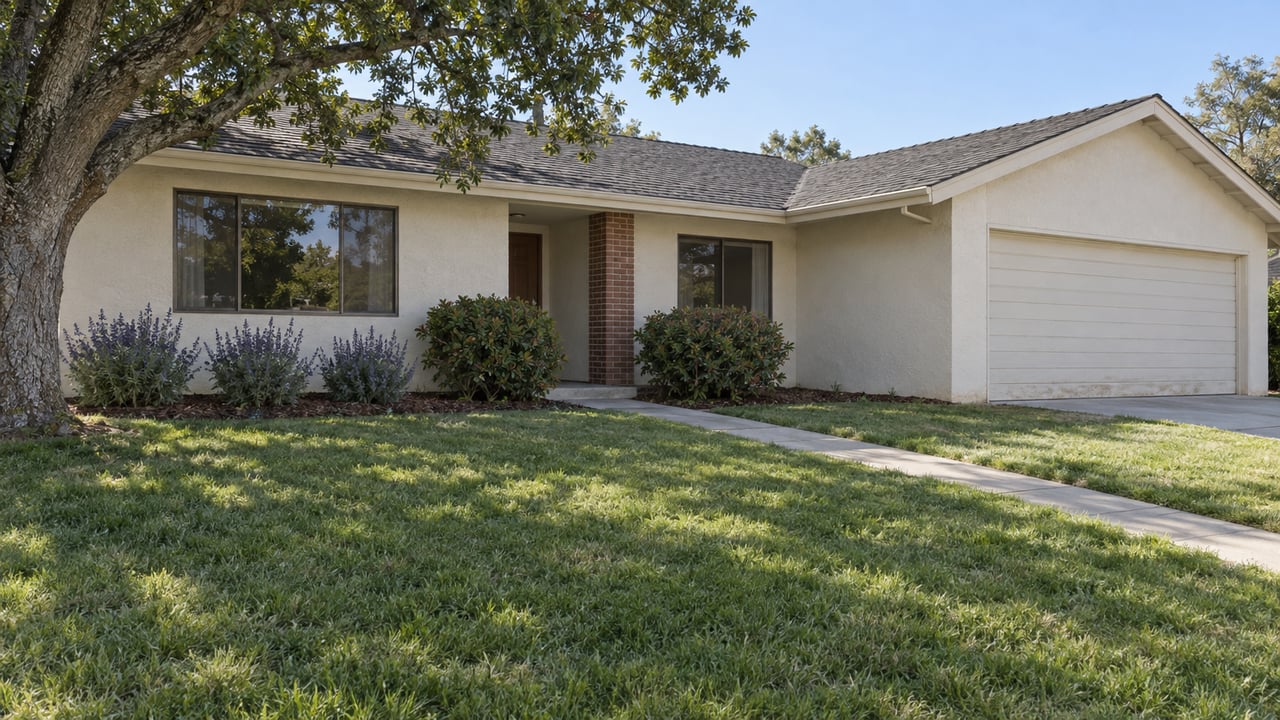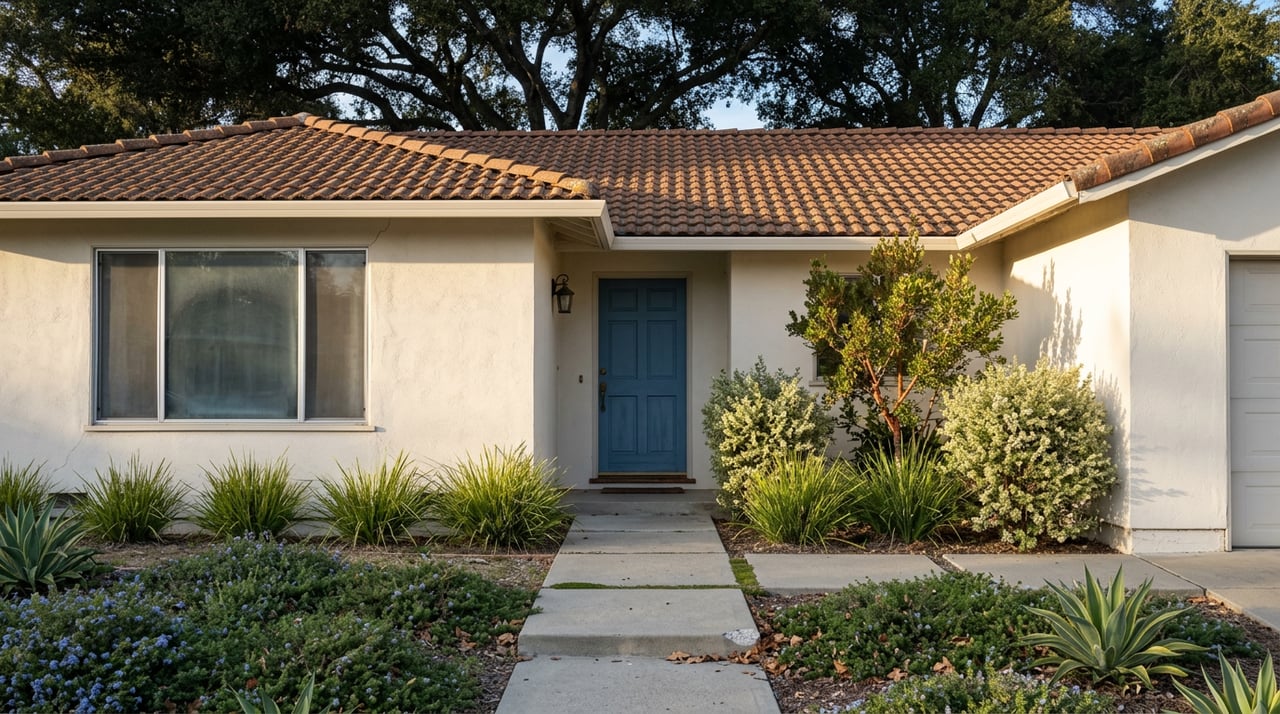
A couple touring homes in Los Altos on the same Saturday sees two listings four blocks apart. One is a fully remodeled three-bedroom with a new kitchen, refinished oak floors, and a landscaped backyard. The other is a 1962 ranch with the original cabinets, a single bathroom, and a lawn that hasn't been touched since spring. The remodeled home is priced lower per square foot than the untouched one.
Nothing about that is a mistake. It is how this market actually prices property once you understand what buyers here are really purchasing, which is not always the house.
The Median Doesn't Even Agree With Itself
Anyone who has pulled up three different sites to check the Los Altos median has probably noticed the numbers do not match, and it is not a rounding issue. Redfin's tracking through the three months ending in May 2026 put the median sale price at $4.2 million, down 13.8 percent year over year, with homes going pending in 10 days. Zillow's estimate for the same period landed at $3.9 million, down 8.2 percent year over year. Houzeo's figures, current through June 2026, showed a median of $4.23 million, up 6.42 percent year over year, with homes moving in 30 days and 72.22 percent of sales closing above asking price, up from 42.86 percent the year before.
Three sources, one city, three different directions on the year-over-year line. That spread is not noise. It is a signal that the "median" is blending together sales that have almost nothing in common: teardown lots, lightly updated ranches, and brand new construction, all averaged into a single number that describes none of them well.
The variable that actually explains the spread is land. Once you separate what a lot is worth from what the structure on it is worth, the contradictory headlines start to make sense.
The Tax Notice That Shows Up After You Tear It Down
Here is the part that catches buyers mid-transaction rather than at the open house. California's Proposition 13 ties a property's tax basis to its purchase price, not its current market value. A full teardown and new build triggers a complete reassessment to current market value once construction finishes, which can mean a significant jump in the annual tax bill if the lot was purchased decades ago at a fraction of today's price.
Some buyers consider a whole-house remodel rather than a ground-up teardown. Anyone weighing that approach for its potential effect on future tax exposure should confirm the specifics before writing an offer, not after the demo permit is pulled.
This single mechanic explains a lot of the pricing behavior that confuses out of town buyers. A home that looks like a straightforward teardown to a renovation-minded buyer may carry a very different calculation for a builder who is weighing new construction against a tax basis reset.
The Formula Builders Actually Use
Builders shopping Los Altos lots are not thinking about replacement cost or how much the existing structure would cost to rebuild. They are running a residual land value calculation, which works backward from the finished product:
- Start with the projected finished value, meaning what a completed, market-ready home on that lot will realistically sell for.
- Subtract hard construction costs, which in the Bay Area in 2026 run roughly $450 to $950 or more per square foot depending on finish level and site complexity.
- Subtract soft costs, including architecture, structural and civil engineering, permits, and impact fees.
- Subtract financing and carrying costs for the 18 to 28 month build timeline.
- Subtract the profit margin the builder needs to justify taking on the project.
- What remains is the maximum price the builder can afford to pay for the land.
That number, not the condition of the kitchen or the age of the roof, is what shapes offers on teardown-quality properties. It is also why entitlement risk matters as much as square footage. A lot with a clean, objective path to a lot split or an easier design review process is worth more to a builder before a single wall comes down, because that builder's own math changes the moment the approval timeline shortens.
What the Per-Square-Foot Number Actually Reveals
If the citywide median is too blended to be useful, price per square foot broken out by area tells a cleaner story. In the first half of 2026, North Los Altos set a new record average of $2,183 per square foot, up 6 percent from the same period in 2025.
| Metric | Figure | Window |
|---|---|---|
| Redfin median sale price | $4.2M (down 13.8% YoY) | 3 months ending May 2026 |
| Redfin price per square foot | $1.94K (up 3.6% YoY) | Trailing period through May 2026 |
| Zillow average home value | $3.9M (down 8.2% YoY) | As of May 2026 |
| Houzeo median sale price | $4.23M (up 6.42% YoY) | As of June 2026 |
| North Los Altos price per sq ft | $2,183 (up 6% YoY, a new high) | First half of 2026 |
A record price per square foot climbing at the same time citywide medians are falling by double digits on one data provider is not a contradiction once you know what is being measured. Per-square-foot pricing rises when buyers are competing hardest for the land underneath a home, regardless of what condition that home is in. Citywide medians can fall even as that happens if the mix of what sold shifts toward smaller, older properties in a given quarter.
SB 9 Quietly Added a New Variable to Old Lots
California's SB 9 can allow up to two primary units on a single-family lot and can enable an urban lot split when a set of objective local standards is met. Los Altos adopted its own ordinance setting the specifics: minimum lot size after a split, minimum frontage, an owner-occupancy affidavit for lot splits, and a defined list of disqualifying site conditions.
For a buyer evaluating an older Los Altos property, whether that lot meets SB 9's objective standards is now a real input into what the land is worth, separate from anything the existing house offers. It does not override the city's own caps on lot coverage and floor area, which are set by zoning district, but it does broaden the pool of buyers who might bid on a given parcel. Anyone curious about what is currently moving through the pipeline can browse the city's own development project tracking on the City of Los Altos website.
The house is often the least expensive part of what you are buying in Los Altos. The land underneath it is doing most of the pricing.
What This Means at the Entry Point
At the $3 million level, a Los Altos buyer as of spring 2026 could typically expect somewhere between 1,400 and 1,700 square feet on a lot in the 6,500 to 8,000 square foot range, sometimes in original, unrenovated condition. New construction at any scale in this market generally starts well above that budget. For a buyer who plans to renovate or eventually rebuild, that combination of a modest structure and a workable lot can be the more strategic entry point than a fully finished home at the same price, precisely because the land is carrying the long-term value.
Frequently Asked Questions
Does every older home in Los Altos sell for land value alone? No. Location within the city, lot dimensions, slope, and whether a parcel meets objective standards for a lot split all affect whether a property is priced primarily as land or as a livable structure with some renovation upside.
What should I confirm before a major remodel? Confirm the potential tax implications with the assessor's office before finalizing renovation plans, not after.
How do I find out if a specific Los Altos lot qualifies for an SB 9 split? The city's ordinance sets objective criteria including minimum lot size after a split, frontage requirements, and a list of disqualifying conditions, so a lot-specific feasibility check against those standards is the only reliable way to know before making an offer contingent on that potential.
Working Through the Math With Someone Who Reads Contracts for a Living
Land economics like these are exactly where a legal background earns its keep, whether that means reading a reassessment notice correctly, understanding what a lot split contingency should say in an offer, or knowing which questions to ask before a demo permit gets pulled. If you're weighing a purchase or a sale in Los Altos and want to understand what a specific property's numbers actually mean, Michal Amodai can walk through it with you. Get Your Free Home Valuation to see where your property fits into this math.
This article is general information, not legal, tax or financial advice. Consult a qualified professional about your situation.